The Genius of Nature
For since the creation of the world God’s invisible qualities—his eternal power and divine nature—have been clearly seen, being understood from what has been made, so that people are without excuse.
Romans 1:20 NIV
When Paul wrote that, not many in his world would have disagreed. The world was mysterious and amazing and certainly wasn’t made by human hands. Everything looked like it had been made for a purpose.
For most of history, people who were guided by common sense and intuition were convinced that living things were the product of purpose, not chance.

Then, during the “enlightenment” period, western culture was anxious to cast off all authority, starting with the church and God. Biblical criticism and then evolution had been chipping away at our confidence in a Creator at least since the 18th century. Materialism gained a foothold and gradually became the dominant worldview. By Darwin’s time it had morphed into scientific materialism. It seemed to more and more people that science confirmed a materialist view – that the world was an accident, and therefore meaningless.
Purposeful creation will always need defenders. And that’s easier than ever now, because science continues backing us up with new discoveries. At the beginning of the 20th century, science started to uncover previously hidden realities that implied a Creator. With the discoveries of Einstein and others, scientists gradually realized the universe had a beginning. Beginnings imply beginners. Next, physics began to prove that natural forces and the relationships between them must be finely tuned to exact values to permit life. The world was looking less and less like an accident. Then about 50 years ago, molecular biology found that cells are animated by tiny molecular machines.
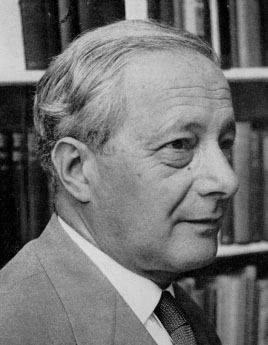
Philosopher Michael Polanyi once pondered this question: “If mankind disappeared from the earth, what would change?” He decided the biggest change would be that the production of machines would immediately end. No new machines would be made until intelligent beings returned. Nature can’t do it. Machines are always the products of human activity. But if machines are always products of intelligent activity, then who made the molecular machines we find in cells?
Even though science has been uncovering new revelations that imply a Creator for at least 50 years, most scientists, textbooks, and popular culture are still trying to grapple with it from a materialist worldview that can’t acknowledge either purpose or meaning. The contradictions that result are adding up.
But there is a growing group of scientists and philosophers who are bringing an Intelligent Design (ID) perspective to their work. Thanks to them, we know about discoveries that shout purpose and intention, not a lucky string of accidents. The rest of this Nature study is going to take a closer look at some of the amazing things science has learned and celebrate the genius of creation.
Seeing God through what he’s created is a key ingredient for faith. I think the solid assurance that you’re here on purpose, and not by accident reinforces that. Just as Paul said, God’s eternal power and divine nature can be clearly seen from what he has made. That’s even more true today thanks to the ID perspective. If you have a basic understanding of ID, your faith is strengthened by knowing that science doesn’t contradict it. Also, it’s hard to walk away from your Creator when you’re convinced that materialism isn’t an option.
ID is a scientific pursuit without fear of acknowledging the implications of scientific discoveries. It’s showing us how many things in nature can only be understood by looking beyond the natural world. It adds a perspective of faith to the discoveries of science. And it directs our attention to the necessity of a Creator with purpose and inventive foresight because accidents and chance can’t measure up to the task.
The debate between evolution and faith requires both science and the Bible, not the Bible alone. As you learn to look at nature through an ID lens your faith will be reinforced.
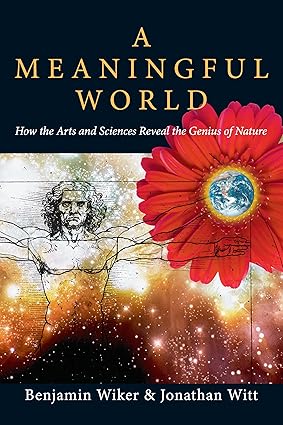
ID points beyond just the necessary existence of our creator to the genius of his creation. One book profoundly changed my perspective in this area: A Meaningful World, by Benjamin Wiker and Jonathan Witt.
After reading it I began to see the natural world as more than amazing and fascinating; it’s also a work of Genius. I’m going to try to bring that out in all the topics I write about in this Nature portion of my blog. I’ll be recommending books at the end of each topic; but if you only have time to read one, make it A Meaningful World.