Darwin’s theory fit the understanding and the spirit of his time. To understand the roots of his theory, we can learn a lot from the time and climates of thought when he lived. We’ve already considered cultural and personal impacts like the Industrial Revolution, the Enlightenment, and Annie’s death. Now let’s look at science in his day.
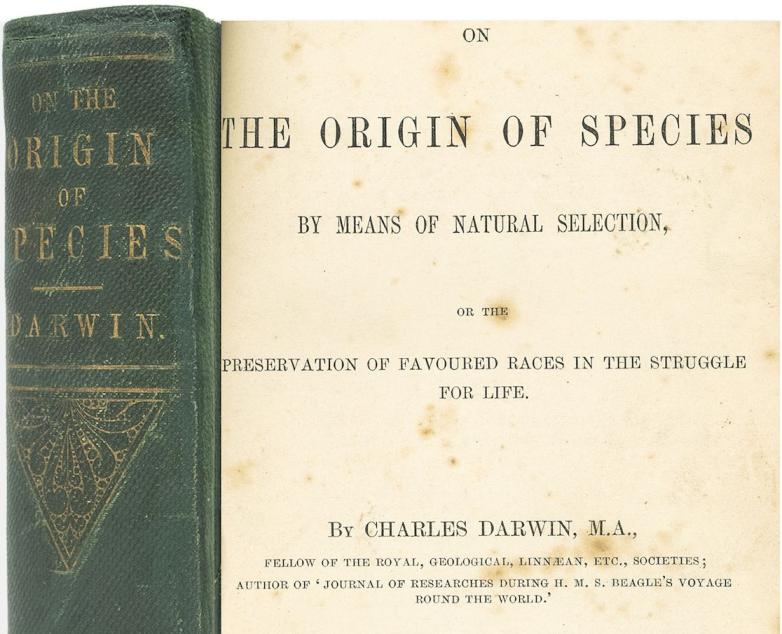
Charles Darwin lived in England in the 1800’s and he published Origin of Species in 1859. He developed his theory before anyone knew much about biology.
Scientists in his day commonly believed that flies could develop spontaneously within rotting meat. Doctors washed their hands after surgery, but never before. After all, surgery was messy!
Before the germ theory of disease came along in the late 1800’s, nobody knew what really caused disease. Doctors thought it resulted when the four humours in your body (blood, phlegm, yellow bile, and black bile) were out of balance. This was first advanced by Hippocrates in the fifth century BC. In the second century AD, Galen expanded on it when he proposed that many diseases were caused by “miasma” or “bad air”. They were old, but still the dominant theories of disease in Darwin’s time. Louis Pasteur’s germ theory of disease would gradually replace those out-of-date theories by the end of the nineteenth century.
Biology in Darwin’s Day
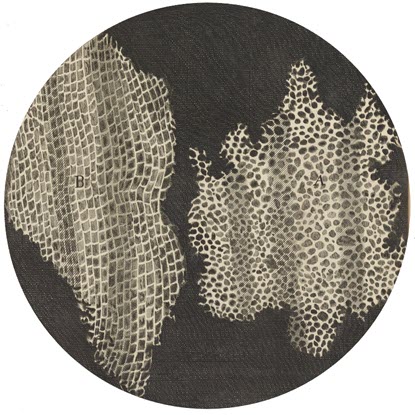
Like every human enterprise, science is constrained by the tools available and the prevailing perceptions of reality. So biology at that time was primarily observational and less experimental. Microscopes hadn’t yet advanced enough to play the major role they do today. When Darwin published Origin, microscopes could magnify a few hundred times. When he looked at a cell in his microscope, he saw this. There was no hint of what was hiding inside.
The scientific world believed that cells were simple building blocks composed of a jelly-like substance they called protoplasm. In 1868, one year before Darwin published Origin, Thomas Henry Huxley delivered a paper and lecture titled “On the Physical Basis of Life”. He proposed that life was neither mystical nor supernatural, but a physical and chemical phenomenon that took place in the cell’s protoplasm.
Victorian scientists couldn’t imagine the complex design of a cell because they didn’t have the tools yet to look inside it. And nothing in their experience approached the complexity of a cell. Scientists expected the foundation of life to be simple and based on chemistry. They would continue to assume that for another hundred years.
Heredity in Darwin’s Day
Even though the focus of Darwin’s theory was heredity, inheritance was a mystery to Darwin and his contemporaries. Scientific knowledge about the nature of heredity was limited to the observation that it appeared to be some “blending” of the characteristics of the mother and father. Concepts like genes and genetics didn’t exist yet, but none of that hindered speculation.
Two theories that related to evolution were popular in Darwin’s day and influenced his thinking.
Lamarck and Continual Improvement
French naturalist Jean-Baptiste Lamarck proposed that physical changes in organisms that had been acquired during their lifetime could be transmitted to their offspring. So a man who built his muscles through his work as a blacksmith could pass along stronger muscles to his children. Lamarck expected that as those new traits and abilities accumulated, significant differences would build up over time. Darwin supposed Lamarck had it right.

Haeckel and Embryology
One year after the publication of Origin, Darwin wrote in a letter to Asa Gray that:
“Embryology is to me by far the strongest single class of facts in favour of my theory of evolution.”
Public Domain
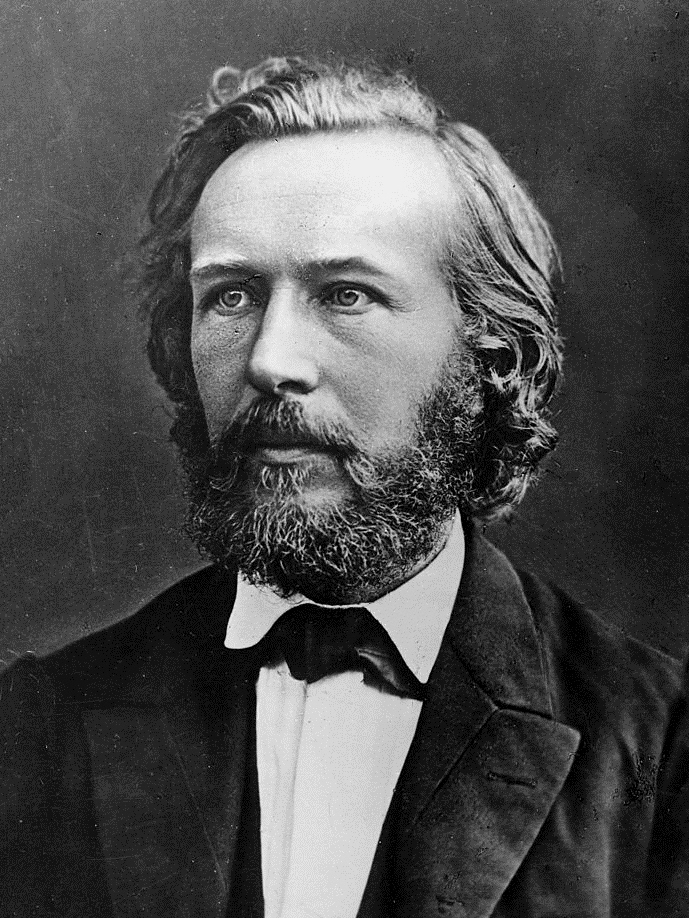
Darwin was referring to an idea made popular in his day by German biologist Ernst Haeckel. Haeckel had published diagrams that claimed to show that during their development, embryos replayed their evolutionary history. He coined a catchy phrase for it, “ontogeny recapitulates phylogeny”, where ontogeny referred to an organism’s physical form and phylogeny to its evolutionary history.
His diagrams seemed to show that embryos start out looking like single-celled organisms, then move through a “sea squirt” stage, then a “fish” stage, and so on. His theory of evolution was that as organisms grew in complexity, each new feature was tacked on to the end of the embryonic process.
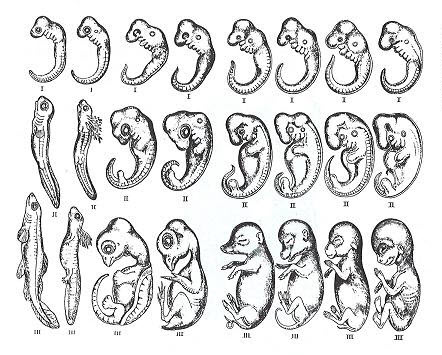
And if you look at Haeckel’s drawings, it does look like the embryos of all animals start out looking like the fish embryo. It would be another 150 years before any scientists checked to see if Haeckel’s drawings were valid. Some theories are just too appealing to even test.
Related Sciences…
At least two other factors influenced Darwin’s thinking on his way to evolution by natural selection.
Thomas Malthus and Population Growth
English cleric and economist Thomas Malthus published his book An Essay on the Principle of Population in 1798.
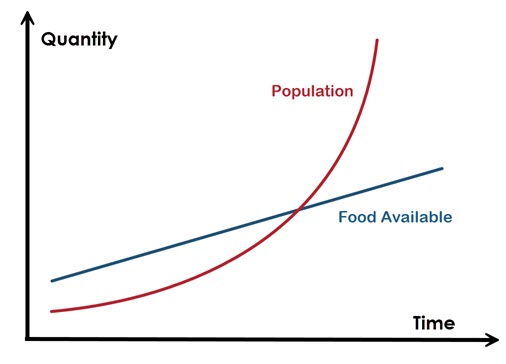
He claimed that populations grow geometrically (multiplication), while food supplies could only grow arithmetically (addition). In other words, population growth always exceeds the growth of food resources.
This would always result in too many mouths to feed and lead to famine and competition for resources.
When Darwin read it, he had already been pondering the effects of random variations among offspring. Here’s his reaction at the time:
“… fifteen months after I had begun my systematic enquiry, I happened to read for amusement Malthus on Population, and being well prepared to appreciate the struggle for existence which everywhere goes on from long-continued observation of the habits of animals and plants, it at once struck me that under these circumstances favourable variations would tend to be preserved, and unfavourable ones to be destroyed. The result of this would be the formation of new species. Here, then, I had at last got a theory by which to work.”
Charles Lyell, Geology, and Gradualism
One year before Darwin departed for a 5-year expedition on the HMS Beagle, Charles Lyell published Principles of Geology. Up until then, geologists believed the earth had been shaped chiefly by intermittent catastrophic events. Lyell proposed instead that geological changes had come about gradually by means of the same physical agents he saw operating at present: erosion, earthquakes, volcanos, shifting, rising, and falling of land masses. Darwin took a copy along on the Beagle and it had significant influence on his views about how nature operates. He referenced Lyell’s work years later when he wrote Origin of Species.
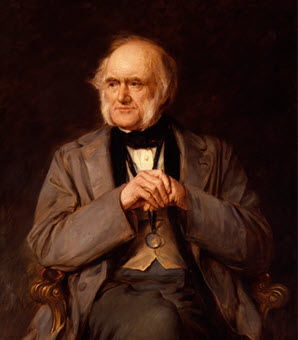
Charles Lyell, by Lowes Cato Dickinson
Courtesy of The National Portrait Gallery, London
Lyell’s theory became known as uniformitarianism, and its motto was “the present is the key to the past”. Darwin extended that principle to biology; species, like geologic features, evolved gradually or died out gradually as a result of biological agents in operation today. Reproduction, inheritance, and competition gradually produced the diversity of life on Earth.
Artificial Selection – Darwin’s Major Influence
The mythology surrounding Darwin has it that he developed his theory based on his careful observations during a five-year voyage on the HMS Beagle. But he never mentions the Beagle in Origin, and his published account of the voyage doesn’t mention natural selection, so that’s very unlikely.
Reading Origin, it’s plain that his theory was primarily based on his experience with artificial selection. Darwin had watched breeders selecting their best cows, or their best sheep, and improving their herds through selective breeding, or artificial selection. They had been able to develop milkier cows, woolier sheep, and faster horses.
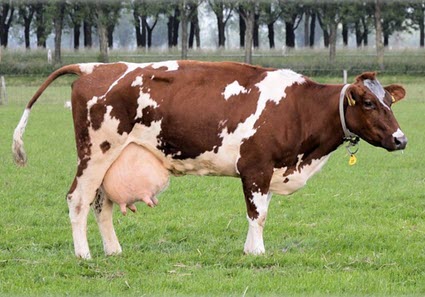
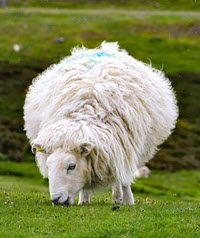
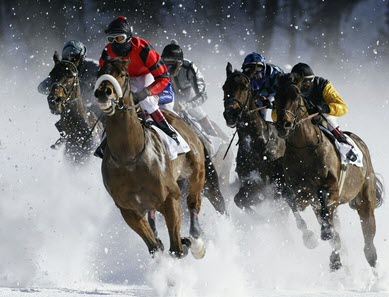
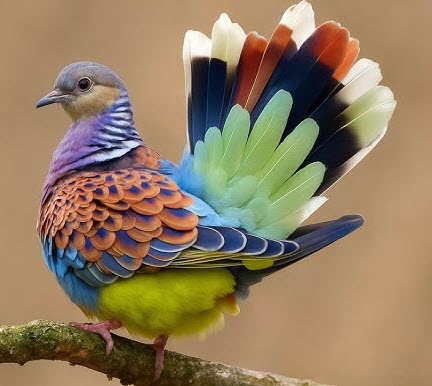
… And sillier pigeons. Darwin’s hobby was breeding exotic pigeons. He had seen how much change breeders could develop in a short period of time through artificial selection. So why couldn’t nature do the same thing to a greater degree, given a much longer period of time?
In Origin, Darwin claimed:
“If feeble man can do much by his powers of artificial selection, I can see no limit to the amount of change which may be effected by nature’s power of selection.”
He called this Natural Selection, and in Origin he said:
“It may be said that natural selection is daily and hourly scrutinizing, throughout the world, every variation, even the slightest; rejecting that which is bad, preserving and adding up all that is good.”
“Descent with modification” was still the cornerstone of his theory. Now it was joined and complemented by natural selection, which Darwin began to think of more as the driving force for evolutionary change, and not just a passive filter for random variations.
Today, evolutionary biologists think of natural selection like a ratchet on a wrench that only allows change in one direction. They claim you get to keep every small improvement that comes along because natural selection captures any successful changes and discards everything else.
Recommended Books:
What Darwin Didn’t Know by Geoffrey Simmons
Darwin’s House of Cards by Tom Bethell