Three friends and I presented this at one of our churches. It took one hour, which left some time for questions and discussion.
Believing in God – in Spite of Science, or Because of it?
Tonight, four of us want to introduce you to Intelligent Design. Three of us are retired engineers, and one a retired Doctor. I’m John, and this is Greg, Bob, and Roger.
Michael Polanyi’s Question
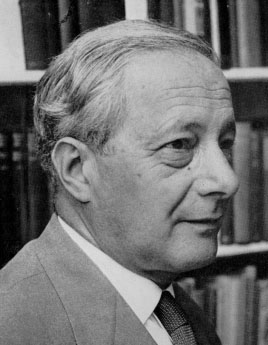
Philosopher Michael Polanyi once pondered this question: “If mankind disappeared from the earth, what would be the most significant change?” He decided the biggest change would be that the production of machines would end. No new machines would be made until intelligent beings returned. Machines are always the products of intelligent activity. Nature can’t do it.
But if machines are always products of intelligence, then who made the molecular machines we find in cells? We’re going to watch short clips of a few of those machines.
Many bacteria move with the help of screw-like propellers called flagella. They’re amazing machines and one of the earliest molecular machines identified.
A cell isn’t a bag of chemicals drifting about. It’s a highly structured molecular factory. And it’s filled with hundreds of thousands of molecular machines. Molecules get transported through the cell to where they’re needed by Kinesins.
Every cell produces the energy it needs through a process called cellular respiration. It uses more than 10 different molecular machines. Here’s the final step in that process, performed by ATP Synthase. There are tens of thousands of these machines embedded in the mitochondrial membranes:
Cells have to be constantly on the lookout for damage, and ready to repair it. One process that needs constant attention is DNA replication. When machines unwind the strands of DNA, twisting and tangling can occur, just like it did with old fashioned telephone cords. Cells have machines called Topoisomerase that can snip and rejoin strands of DNA to untangle them:
Most of us here tonight look at those machines and immediately think of purpose, intention, and design. Machines like that just couldn’t have been accidental; our intuition tells us they’re intentional – they were made for a purpose.
Not everybody sees it that way. In our culture today, people’s reactions will lie on a spectrum that stretches from:
Isn’t evolution amazing… to … Isn’t our Creator amazing…
That’s partly because we’ve been taught repeatedly since we were young that science has already proven that:
- Life evolved naturally, no Creator was needed…
- Science will eventually answer all our questions…
- Faith is just a poor substitute for scientific knowledge…
None of those statements is actually true, but nobody was saying so out loud until Intelligent Design appeared.