What is Intelligent Design?
Intelligent Design began when a handful of scientists came to a realization:
When we look at things like molecular machines, life sure looks designed. What if seeing God’s handiwork in creation is more than just intuition – maybe it’s scientifically detectable.
This is a more consequential idea than it sounds at first. Before molecular biology began to reveal the reality about cells and life, the best defense in the debate between a Creator vs. accidental chance was the Bible. But in our culture, biblical authority is overruled by science. In an unexpected reversal, the science of molecular biology has been delivering the evidence we needed since the 1960s.
This was also hard-won insight – it contradicted all their education from childhood on and it contradicted the culture as well. In order to make a solid scientific case for design, they knew their intuition needed formal scientific proof. For the past 40 years they’ve been delivering that.



From an ID perspective, God’s creative work should be detectable, because design is detectable. We instantly know the difference between the pile of stone and brick and the mansion. We recognize design every day automatically, because we all recognize its signposts:
- a purposeful arrangement of parts,
- fitness for a specific function,
- required intention and foresight
William Paley wrote about spotting design in his 1802 book, Natural Theology. He observed that:
“If you found a watch in a field, you’d naturally assume it had a designer. Shouldn’t we also recognize that living organisms, which are brilliant pieces of biological machinery, must have had one too.”
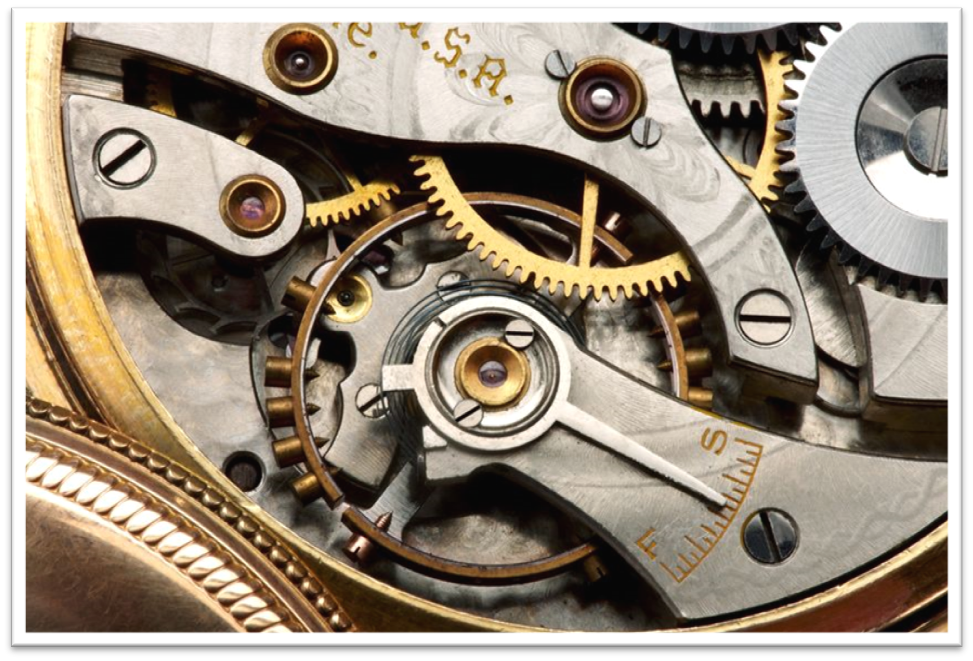
I think our intuition that life looks designed has always been there; ID is proving there’s formal scientific support for our intuition. Stephen Meyer is among the original group of scientists who recognized God’s hand in creation. Here’s his definition of ID:
“When we see intentionally designed systems, purposeful arrangement of parts, we know that an intelligent agent, a mind, must be the cause. The theory of intelligent design simply says that certain features of the universe and of living things are best explained by an intelligent cause, not an undirected process such as natural selection.”
From my layman’s perspective, ID simply makes an honest comparison between what an intelligent mind can do and what nature can do.
An ID Framework Clarifies Our Thinking
The word evolution is widely used. It can apply to things like:
economic systems, political ideologies, legal systems, human language, music, architecture, vehicle designs, phones, relationships, cities, road systems, computers, clothing styles…
… pretty much anything that is a product of the rational activity of humans. Those actually do evolve, often quickly, so we’re conditioned to believe that life probably evolved too. But those things change because of the actions of intelligent humans, not the blind forces of nature.
When evolutionists apply the same word to living systems, in our minds it inherits validity it didn’t earn.
Even within the world of biology, the word evolution is used for what are really two different processes. The terms micro- and macro-evolution were coined by Darwinists in 1927 to distinguish the two processes.
Micro-evolution describes the small variations and adaptation observed within or between closely related species. In 1927, most of the evidence for micro-evolution came from artificial selection, used by farmers to improve their herds. Micro-evolution is observable, and it isn’t controversial. It’s just poorly named. In any high school or college textbook you pick up, every example called evolution is micro-evolution. They have to extrapolate to arrive at macro-evolution.
Macro-evolution imagines large-scale changes – morphing amoebas into man. It’s never been observed and it’s the reason for the evolution controversy. Evolutionists start with the small changes they observe, then extrapolate over time to produce entirely new animals, or macro-evolution.
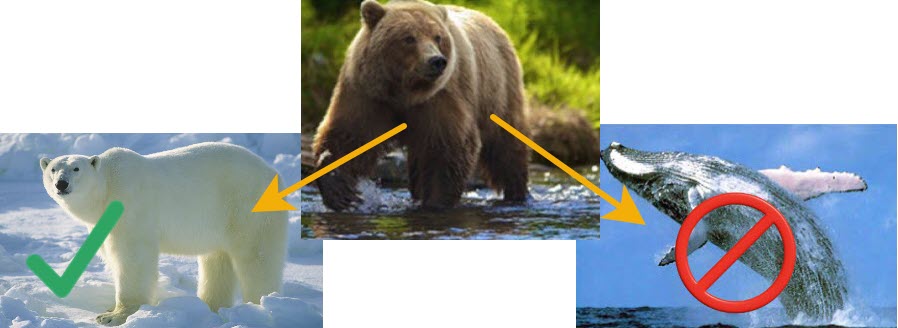
Bears to Whales
In concrete terms, micro-evolution would be a brown bear becoming a polar bear. Polar bears actually are the result of mutations that damaged two genes in brown bears; the first eliminated the brown pigment in their fur, and the second eliminated an enzyme that reacted to the high fat diet of seal blubber. Macro-evolution would be a brown bear becoming a whale. Brown bears morphing into whales never actually happened.
Essential Principles that Challenge Evolution at its Roots.
Set aside the materialist lens our culture promotes, and study science with an ID friendly worldview. You’ll see why you can be absolutely certain that bears could never morph into whales. It’s because new discoveries in molecular biology have revealed definitive principles that challenge evolution at its roots.
1. Life is founded on Information, not on Chemistry.
Before molecular biology, it was easy for people to imagine that organic compounds could form spontaneously from elements, then those could combine to form cells, and then pretty soon, life would naturally emerge.
But that assumed that life is a chemical phenomenon. It’s turned out that life is based on information, not chemistry; chemistry is necessary, but not sufficient for life. It’s information that’s orchestrating the chemistry to do what life needs.
Chemistry explains how molecules are held together, but it can’t explain the sequence of the nucleotides in a DNA molecule. Their sequence isn’t determined by any chemical or physical law. And it’s their sequence that carries information that drives cellular processes, exactly like letters in words.
The information in DNA forms an alphabet, a language, and a code. Languages and codes are intangible. The meaning communicated by words only exists as an agreement between speakers and listeners. Here are two short sentences:
Shall I compare thee to a summer’s day?
Bgalt A rehgroye vbtt ps c drokmest kro!
Those sentences have the same number of characters, but the first has meaning and the second doesn’t. But that’s because we’ve all agreed to the definitions for words ahead of time.
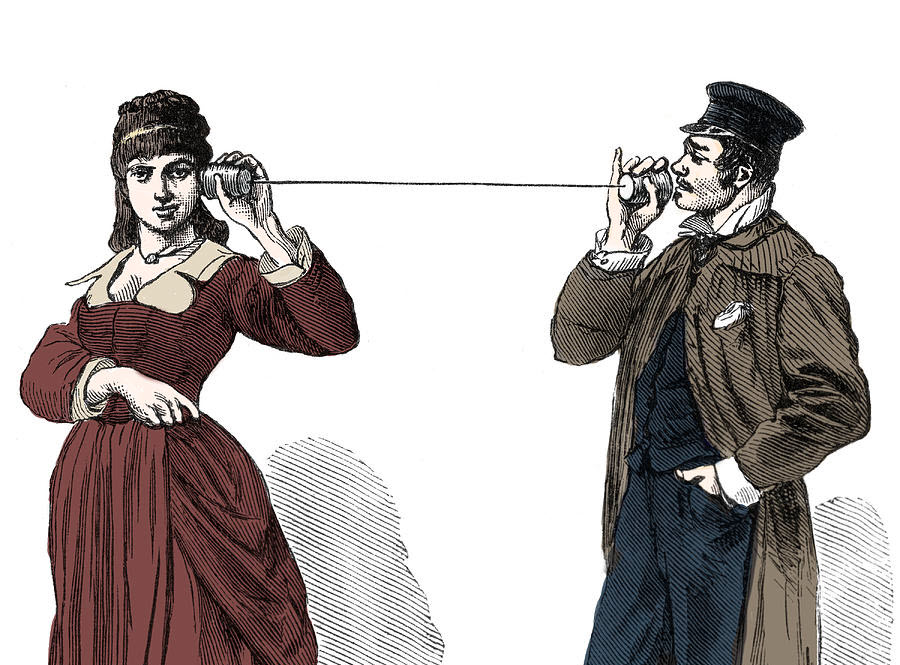
In a cell, the roles of speaker and listener are handled by dozens of molecular machines. Molecular machines need to:
- locate the right instructions in DNA.
- Translate them into another form.
- Put them into action.
How did those inanimate machines figure out the code and their part in it?
Specified information is scientifically detectable. We can calculate the limit of chance and time for any series of events, and be certain when its information content exceeds that limit. We also know that the only known source for specified information is intelligence.
But when we simply look at the world God made for us, we don’t see information. What we see is genius and brilliance! And as technology lets us look more closely, the genius of creation grows more and more majestic. We just don’t yet know how to demonstrate those qualities using science.
2. Natural Selection can’t Produce a Multi-Component System.
Multi-component systems have a minimum set of parts that can produce functionality. Scientists call this property irreducible complexity. The classic example for this is a mousetrap. It’s made from just 5 parts, but each one is essential. It can’t catch a mouse if even one of those 5 parts isn’t there. Evolution’s foundational precept is that natural selection is constantly selecting and promoting accidental improvements that help an organism, but removing anything that didn’t help.
If you want to build a mousetrap in small steps, natural selection can’t help you. All the parts have to be there and working to give natural selection a reason to keep them. It can’t look into the future, so even if you have 4 out of 5 parts, natural selection won’t realize that with just one more part, you could catch mice.

In Origin of Species Darwin wrote:
“If it could be demonstrated that any complex organ existed, which could not possibly have been formed by numerous, successive, slight modifications, my theory would absolutely break down.”
He then added that to his knowledge, there were no such examples. But in 1859 his knowledge was limited – nearly every part of living systems is made from multiple components and is irreducibly complex.
When you need a multi-component machine or tool, you need a designer and a builder, not gradual evolution.
3. Mutations Can’t Create Brand-New Genes.
Darwinian evolution today is built around the idea that accidental copying errors in DNA, mutations, are the engine of all progress. The question needs to be asked:
What can accidental chance really accomplish?
If you make a few random changes to one of Shakespeare’s sentences, you won’t end up with something even better. Here’s a well-known line from Romeo and Juliet:
“A rose by any other name would smell as sweet.”
If we make just 3 random changes to letters, it erases the meaning:
“A nose by any other game would smell as sweat.”
It’s very unlikely that an accidental change to a complex sentence will improve its meaning. It’s way more improbable that an accidental change in a gene sequence will yield a new and useful gene. By improbable, I mean less than one chance out of the number of atoms in the entire universe. By far the most likely effect of a mutation is to damage or break a gene. Mathematicians can show that before any transformative mutations take place, a gene will accumulate enough random errors to become non-functional.
4. Chicken and Egg Problems are Pervasive in Living Systems.

Living cells are one chicken and egg problem after another. For just one out of hundreds of examples – the process of building a protein requires the use of at least 50 other (different) proteins. How could you gradually evolve a system if you can’t make a protein until you’ve already made 50 others?
Only intelligence and foresight can design and build a system packed with chicken and egg problems.
When you think about it, there’s no mechanism ever proposed for evolution that doesn’t break every one of those principles.